
You will have seen the words on menus and bottles all over the place: peri peri, peri-peri, piri piri, and even piri-piri. They look almost identical, they get used interchangeably, and yet plenty of people wonder whether there is any real difference at all. If you have been searching for proper peri peri in Southampton, this is the honest, appetising explanation you have been after.
The words are the same, the standards are not
Let us clear up the spelling first, because it trips everyone up. Peri peri and piri piri are two ways of writing the same thing. The word comes from Swahili, where "piri piri" simply means "pepper pepper", a doubling that points to the small, fiery African bird's eye chilli at the heart of it all.
Portuguese explorers and settlers brought that chilli together with garlic, citrus, herbs and oil, and the sauce we know today was born across Portugal and its former colonies in Africa. So neither spelling is wrong. "Piri piri" leans towards the traditional Portuguese rendering, while "peri peri" is the version many high street brands have made familiar.
The spelling on the sign tells you nothing about the food. What matters is what happens in the kitchen.
Key takeaway: Peri peri and piri piri mean exactly the same thing. The real difference is not the spelling, it is whether the chicken is properly marinated and grilled over real charcoal.
What real Portuguese chicken actually involves
There is a version of peri peri that arrives fast, glazed in something sweet and sticky, cooked on a flat metal grill and finished with a squirt of sauce from a bottle. It is fine. It is not what we do.
Real Portuguese chicken is built on three things: the marinade, the cook and the finish. Get all three right and you taste it in the very first bite.
The marinade does the heavy lifting
A good piri piri chicken is not seasoned, it is transformed. We marinate ours for a full 24 hours so the garlic, chilli, citrus and herbs work right into the meat rather than just sitting on the surface. That long soak is why the flavour reaches the bone instead of stopping at the skin.
This is the step that gets skipped most often when speed is the priority. You cannot rush a marinade. Time is the ingredient you cannot fake.
The charcoal is not optional
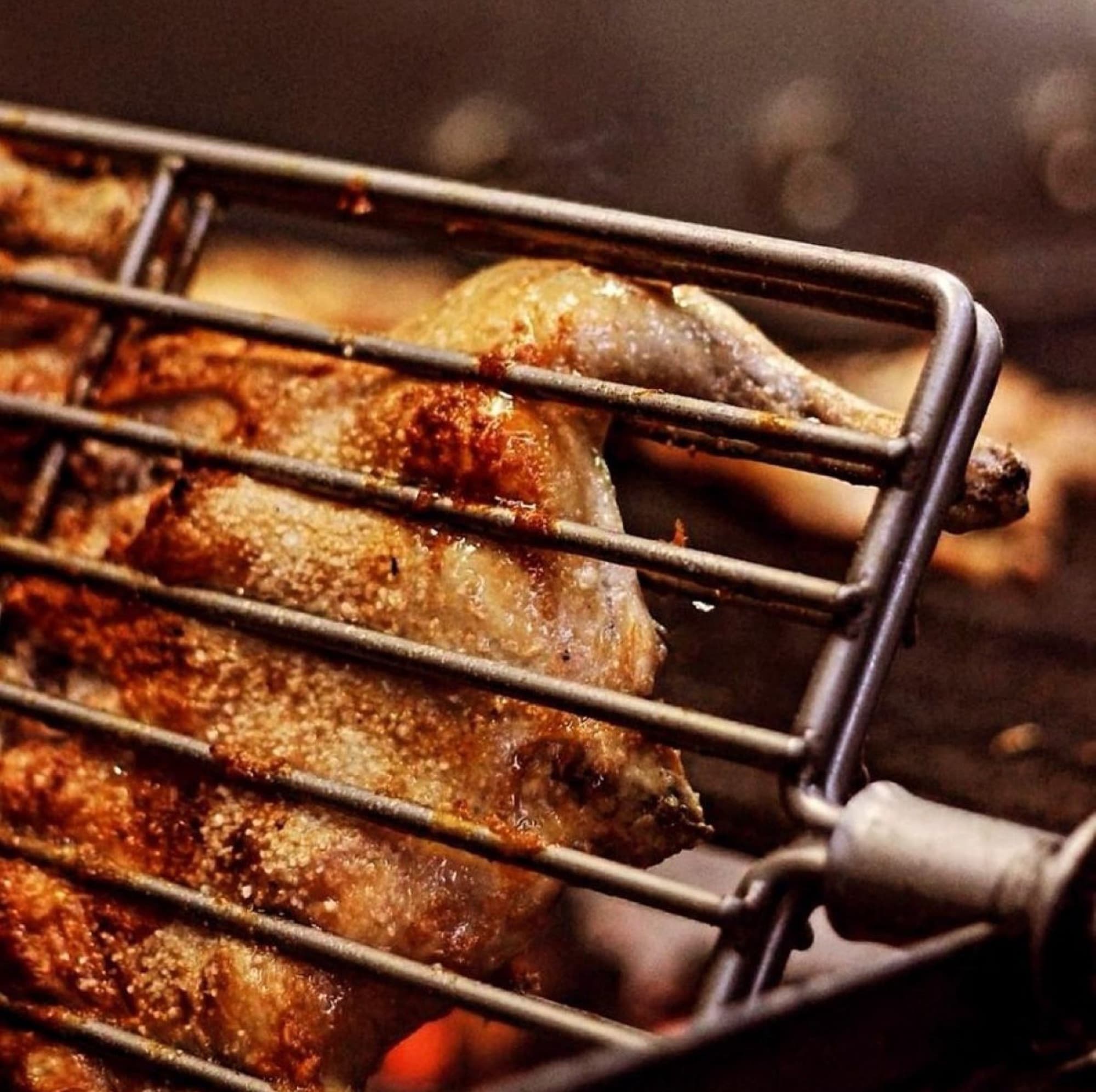
Here is where a lot of "peri peri" falls short. Grilling over live charcoal is harder, slower and messier than using a gas or electric grill, but it is the difference between chicken and something special.
Charcoal gives you that faint smokiness, the caramelised edges and the slight char on the skin that no bottle of sauce can imitate. When the fat renders down over glowing coals, it flares and colours the outside while keeping the inside juicy. That is flavour you can only earn with fire.
We have been cooking this way since 2007, and at 10 Bedford Place since 2013, and we would not do it any other way. If you want to read more about the tradition behind the plate, our piece on what makes real piri piri chicken goes deeper into the story.
The heat should be a choice, not a gimmick
Proper piri piri respects that everyone tastes chilli differently. The point is not to blow your head off, it is to layer heat over garlic and citrus so the whole thing sings.
That means you should be able to choose your level, from a gentle lemon and herb through medium and hot up to something that genuinely bites. A good kitchen lets the chilli support the chicken rather than bury it.
How to tell the real thing when you order it
If you are new to all this, here are the signs you are getting the genuine article rather than a fast-food impression.
Look at the skin
Real charcoal chicken has colour. You want burnished, slightly blistered skin with darker patches where the flame kissed it, not a uniform orange gloss. Even, glossy and identical usually means a spray finish rather than a grill.
Taste past the sauce
With properly marinated chicken, the flavour is inside the meat, not painted on top. Take a bite from a piece with no visible sauce on it. If it still tastes of garlic, citrus and gentle smoke, you are in the right place.
Check the sides and the spread
Portuguese food is generous and made for sharing. Alongside the chicken you should find things worth building a table around: spiced rice, chips, salads, corn and more. At our place the grill also turns out ribs, wings, handmade burgers, seafood and cocktails, so peri peri chicken is the star of a much bigger show. Have a look at the full menu to see how it all fits together.
Why Southampton keeps coming back for it
We think the appeal is simple. Peri peri chicken is comfort food with character. It is unpretentious, it is sociable, and when it is done properly it is genuinely crave-worthy in a way few dishes manage.
There is something about a table piled with charcoal chicken, a good level of heat and cold drinks to go round that turns an ordinary evening into an occasion. It works for a quick catch up on Bedford Place, a family dinner, or a big noisy group taking over the corner.
Perfect for sharing
One of the joys of Portuguese chicken is that it was born to be pulled apart and passed around. Order a spread across the table, mix your heat levels so everyone gets what they like, and let people help themselves. It is easy, relaxed dining that suits birthdays, work outings and celebrations just as well as a casual Tuesday.
If you are thinking of bringing a crowd, our group dining options are made for exactly this kind of sharing feast, with buffets and platters that keep everyone fed and happy.
The short version
Do not get hung up on the spelling. Peri peri and piri piri are the same words for the same African bird's eye chilli and the same Portuguese tradition. What separates the ordinary from the memorable is the 24 hour marinade, the live charcoal grill and a kitchen that treats heat as a choice rather than a stunt.
That is the standard we hold ourselves to on every plate that leaves our grill. Once you have tasted chicken cooked this way, the bottled, flat-grilled version never quite satisfies again.
Come and taste the difference
The best way to settle the peri peri versus piri piri question is to sit down with a plate of the real thing and decide for yourself. We would love to have you in.
Book a table at reservations or give us a call on 023 8192 0466, and let us show you what proper Portuguese charcoal chicken tastes like.